
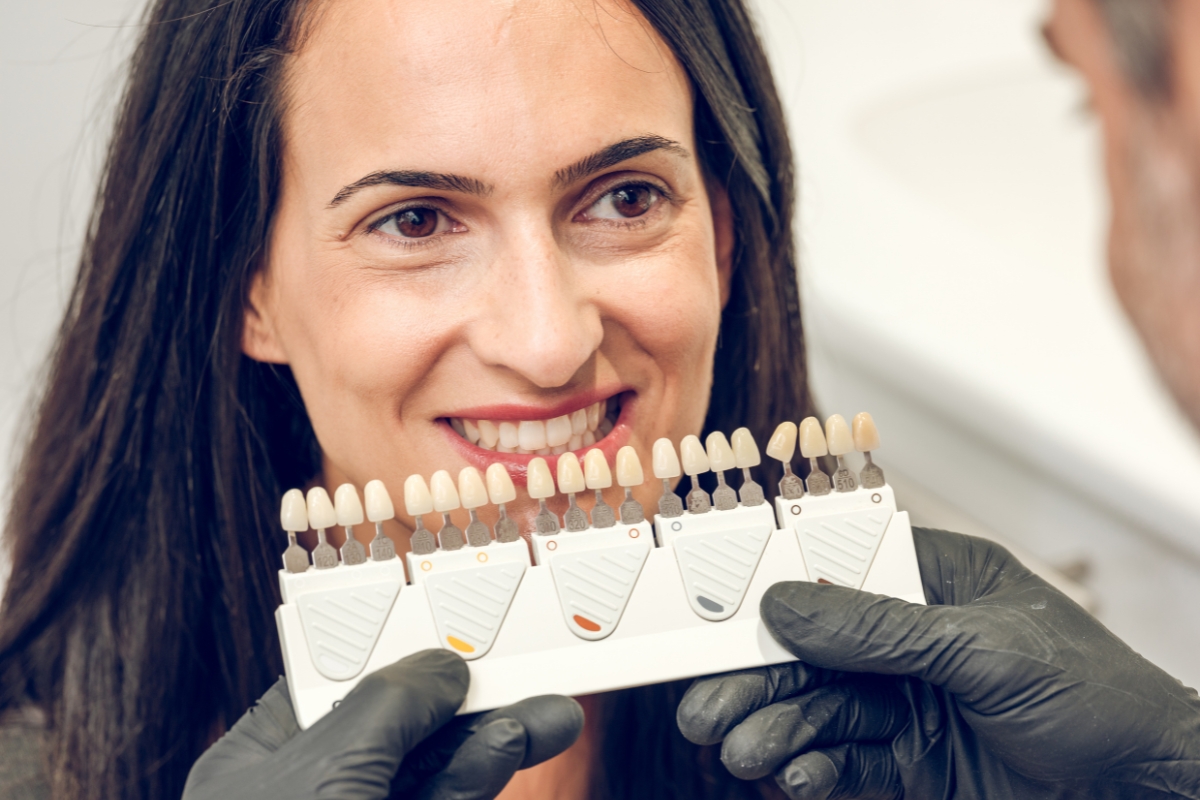
Bioclear vs. Porcelain Veneers: Choose the Right Alternative for Closing “Black Triangles”
You finally notice that dark little triangle of space peeking between your front teeth, right at the gumline. You’ve been smiling a little less confidently lately, maybe turning slightly away in photos. You’re not imagining it, and you’re definitely not alone. These gaps, clinically called “open gingival embrasures” but better known as black triangles, are one of the most common cosmetic dental concerns we hear about. The good news? There are genuinely great solutions and understanding your options puts you in the driver’s seat.
Two treatments rise to the top of the conversation: Bioclear vs. porcelain veneers. Both can beautifully close black triangles and transform your smile, but they work differently, cost differently, and suit different people. Let’s walk through what each involves so you can make a confident, informed choice.
What Exactly Are Black Triangles And Why Do They Form?
Black triangles appear when the gum tissue between teeth (called the papilla) doesn’t fully fill the space at the base of the tooth contact point. They can develop due to:
- Gum recession from aging or gum disease
- Orthodontic treatment that moves teeth without reshaping the papilla
- Natural tooth shape triangular teeth leave more open space at the base
- Bone loss from periodontal disease
They’re rarely a health emergency, but they can trap food, affect speech, and most noticeably affect the way you feel about your smile.
What Is Bioclear, and How Does It Work?
The Bioclear matrix system is a minimally invasive cosmetic treatment that uses warm, flowable composite resin injected around the tooth using specialized clear matrix forms. Think of it as a highly precise sculpting process the composite bonds directly to the existing tooth surface, filling in the dark space and creating a natural-looking, seamless result.
Key benefits of Bioclear treatment:
- Tooth-conserving — no drilling or removal of healthy enamel
- Completed in one visit — no waiting for lab-fabricated restorations
- Reversible — can be adjusted or removed without harming the tooth
- Cost-effective — typically less expensive than porcelain veneers
- Highly aesthetic — modern composite materials closely mimic natural tooth appearance
- Durable — when properly maintained, results can last 5–10 years or longer
Bioclear is particularly well-suited for patients whose black triangles are the primary concern, and who have otherwise healthy, intact teeth. It’s also an excellent option for younger patients or anyone who wants to avoid permanently altering their teeth.
What Are Porcelain Veneers, and When Are They the Better Choice?
Porcelain veneers are ultra-thin ceramic shells custom-crafted in a dental lab and permanently bonded to the front surface of your teeth. To place them, a small amount of enamel (typically 0.3–0.7mm) is removed to ensure a proper fit and natural appearance.
Key benefits of porcelain veneers:
- Exceptional aesthetics — porcelain beautifully mimics the light-reflecting quality of natural enamel
- Stain-resistant — ceramic resists coffee, wine, and other common stains
- Long-lasting — with good care, veneers can last 10–20 years
- Comprehensive transformation — ideal when correcting shape, color, size, and black triangles simultaneously
- Minimal maintenance — brush and floss as normal
Porcelain veneers are the stronger choice when a patient is also dealing with discoloration, worn or chipped teeth, or wants a complete smile makeover alongside closing black triangles. If you’re looking to address multiple cosmetic concerns in one treatment plan, veneers offer a comprehensive solution.
If you’re exploring your options for a complete aesthetic upgrade, our cosmetic dentistry services cover everything from Bioclear and direct composite veneers to full porcelain veneer transformations.
Bioclear vs. Porcelain Veneers: A Side-by-Side Comparison
| Feature | Bioclear | Porcelain Veneers |
| Enamel removal | None | Minimal (0.3–0.7mm) |
| Treatment time | 1 visit | 2–3 visits |
| Reversibility | Yes | No |
| Longevity | 5–10+ years | 10–20 years |
| Stain resistance | Moderate | High |
| Best for | Black triangles, minor gaps | Full smile transformation |
| Cost | Lower | Higher |
Which Option Is Right for You?
Here’s a simple way to think about it:
Choose Bioclear if:
- Your main concern is closing black triangles
- You want a conservative, reversible treatment
- You’re on a budget or want to complete treatment in one day
- Your teeth are otherwise healthy and well-shaped
Consider porcelain veneers if:
- You want to address color, shape, and gaps all at once
- You’re planning a comprehensive cosmetic dentistry makeover
- You want the longest-lasting, most stain-resistant result
- You’re comfortable with a small amount of enamel preparation
It’s also worth noting that composite bonding vs. porcelain veneers is a broader conversation in cosmetic dentistry and Bioclear is essentially an advanced, highly controlled form of composite bonding. Its precision delivery system sets it apart from traditional freehand bonding techniques, producing more consistent and aesthetically refined results.
Ready to Close Those Black Triangles for Good?
Both Bioclear and porcelain veneers offer genuinely impressive results, the best choice simply depends on your smile goals, timeline, and what your dentist recommends based on your oral health. The important thing is that you don’t have to keep hiding your smile.
At Brentwood Dental Group, our cosmetic team takes the time to understand your goals and walk you through every option with zero pressure. Whether you’re leaning toward a quick Bioclear appointment or dreaming of a full smile makeover with porcelain veneers, we’re here to help you decide with confidence.
Schedule your cosmetic consultation today and take the first step toward a smile you’re proud to show off.
Frequently Asked Questions
Q: Is Bioclear treatment painful?
Bioclear is typically painless and requires no anesthesia for most patients. The procedure is non-invasive since no tooth structure is drilled or removed.
Q: How long do porcelain veneers last compared to Bioclear?
Porcelain veneers generally last 10–20 years with proper care, while Bioclear composite restorations typically last 5–10 years before they may need touch-ups or replacement.
Q: Can Bioclear fix black triangles as effectively as veneers?
Yes for black triangles specifically, Bioclear is an excellent solution. Veneers offer broader cosmetic correction, but Bioclear is highly effective at closing these spaces with great aesthetic results.
Q: Are porcelain veneers a permanent treatment?
Yes, veneers are considered irreversible because a thin layer of enamel is removed during preparation. Once placed, you will always need veneers on those teeth.
Q: Which is more affordable: Bioclear or porcelain veneers?
Bioclear is generally the more affordable option. Porcelain veneers cost more due to lab fabrication and the multi-visit process, but they also offer a longer lifespan and higher stain resistance.