
Why Are Dental Implants Worth the Cost? A Detailed Justification
When considering tooth replacement options, one of the first questions most patients ask is: Why do dental implants cost so much? It’s understandable, as dental implants often come with a higher upfront cost compared to traditional methods like dentures or bridges. However, what many may not realize is that this cost reflects far more than just the procedure itself. Implants offer a range of benefits that make them a long-term solution to missing teeth, making them an outstanding choice that is worth the expense.
How Much Do Dental Implants Cost?
The cost of dental implants can vary depending on your unique needs and the complexity of your case. On average, you can expect the cost to range from $3,000 to $6,000 for a single dental implant, including the post, abutment, and crown.
Additional procedures like bone grafting (if needed) or a sinus lift could increase the cost, but are essential for ensuring the success of your implant. For more detailed information on the specific cost of your tooth replacement treatment, especially if you’re considering dental implants in Brentwood, MO we encourage you to contact our dental team or visit our office for a personalized consultation.
Factors That Justify the Cost of the Implant Treatment
Dental implant pricing is based on several important factors. Each one plays a role in ensuring long-term success and durability.
High-Quality Materials Designed for the Body
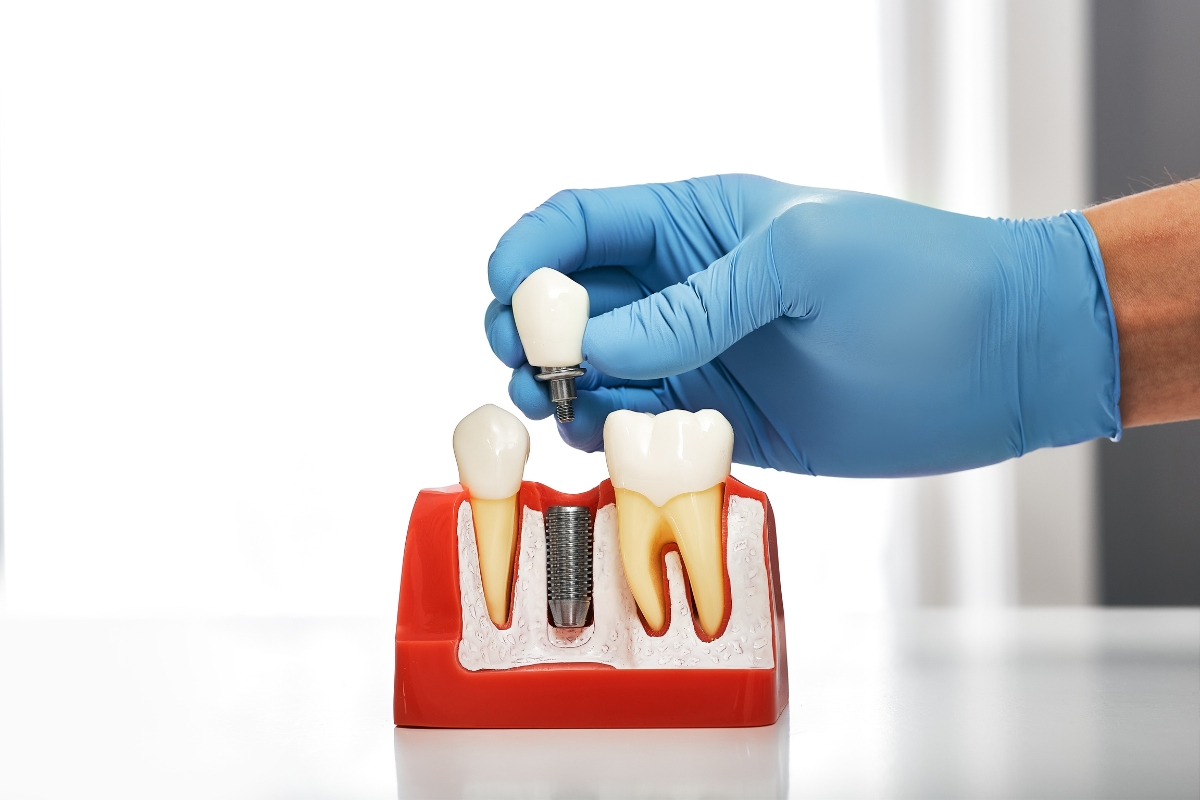
Implants are made from medical-grade titanium, a material commonly used in joint replacements because of how well it integrates with bone. Through a process known as Osseointegration, the implant actually fuses with your jawbone.
This creates a stable foundation that functions much like a natural tooth root.
In addition:
- The abutment is custom-made
- The crown is crafted from durable, aesthetic materials like ceramic or zirconia
- Each component is tailored specifically to your mouth
These are highly customized restorations, not prefabricated solutions.
Advanced Imaging and Treatment Planning
Modern implant dentistry relies on detailed imaging, such as a Cone Beam CT Scan, to evaluate your jawbone structure.
This technology allows dentists to:
- Plan precise implant placement
- Avoid sensitive areas like nerves and sinuses
- Improve overall safety and accuracy
While this level of precision improves outcomes, it also contributes to the overall cost.
Clinical Expertise and Precision
Placing a dental implant is a highly technical procedure that requires skill and experience. It’s not comparable to routine dental work.
Dentists must carefully position the implant in a way that supports both function and aesthetics, all while working around delicate anatomical structures.
This level of care involves:
- Advanced training
- Surgical expertise
- Careful planning
What you’re paying for is not just the procedure itself, but the knowledge and precision that help ensure long-term success.
A Treatment Process That Takes Time
Dental implants are completed over multiple stages rather than a single visit.
The process typically includes:
- An initial consultation and imaging
- Surgical placement of the implant
- A healing period of several months
- Placement of the abutment and final crown
Each step requires time, coordination, and follow-up care. The overall cost reflects this complete process rather than a one-time service.
Dental Implants vs Bridges vs Dentures: Which Is Worth It?
Although implants cost more upfront, they often provide greater value over time.
Dental Implants
- Lifespan: 20+ years (often lifetime)
- Bone Preservation: Yes
- Impact on Other Teeth: None
- Long-Term Cost: Lower over time
Dental Bridge
- Lifespan: 10–15 years
- Bone Preservation: No
- Impact on Other Teeth: Requires alteration
- Long-Term Cost: Moderate
Dentures
- Lifespan: 5–10 years
- Bone Preservation: No
- Impact on Other Teeth: None
- Long-Term Cost: Higher over time
Dental implants are the only option that helps maintain the Alveolar bone. This is important because bone loss naturally occurs after a tooth is lost, and preserving that bone helps maintain your facial structure and oral health. Over the long term, implants can actually be the more cost-effective choice.
Conditions that Lead to Higher Treatment Costs
Some patients may need preparatory treatments before getting implants. These are recommended to ensure the implant has a stable foundation.
- Bone Grafting: This is needed when there isn’t enough bone to support the implant.
- Sinus Lift: Used when placing implants in the upper jaw where bone height is limited.
- Tooth Extraction: Required if a damaged tooth needs to be removed first.
These procedures are not optional when recommended; they are essential to achieving a successful outcome.
Payment Plans to Afford the Implant Treatment
The initial expense of the procedure can be a concern for some patients. However, there are options to make the treatment more accessible:
- Monthly payment plans
- Third-party financing options
- FSA or HSA accounts
- In-house savings or membership plans
It’s also worth noting that while many insurance plans don’t fully cover implants, they may contribute toward related procedures. Breaking the cost into monthly payments can make implants more accessible than they initially appear. However, it is always recommended to ask your implant provider about payment options before proceeding.
Are Dental Implants Worth the Cost?
For many patients, dental implants are considered one of the most reliable long-term solutions for missing teeth.
They offer:
- A permanent replacement option
- Natural look and feel
- Stability and comfort
- Preservation of bone structure
Unlike dentures or bridges, implants replace both the visible tooth and its root, which makes a significant difference in function and longevity.
Final Thoughts
Dental implants are more expensive upfront because they are designed to deliver long-term results. From the materials used to the level of precision involved, every aspect of the treatment is focused on durability and performance.
Rather than viewing implants as just another dental expense, it can be helpful to think of them as an investment in your long-term oral health and quality of life.
Schedule Your Dental Implant Consultation in Brentwood
If you’re considering dental implants in Brentwood, the best next step is a personalized consultation.
A thorough evaluation, including 3D imaging, will help determine:
- Your treatment options
- A precise cost estimate
- Available payment solutions
Taking that first step can help you move closer to a stable, confident smile.
FAQs
How much does a dental implant cost in Brentwood, MO?
A single implant typically costs between $3,000 and $6,000, depending on the complexity of the case and any additional procedures required.
Why are dental implants more expensive than dentures?
Implants involve surgery, custom components, and integration with the jawbone, whereas dentures are removable and less complex to produce.
How long do dental implants last?
With proper care, dental implants can last 20 years or longer, and in many cases, a lifetime.
Does insurance cover dental implants?
Most insurance plans do not fully cover implants, but they may help pay for related procedures such as extractions or bone grafting.
Are dental implants worth it?
For many patients, yes. They provide a durable, natural-feeling solution that supports long-term oral health.